
On October 6, H Felix Chau Bradley boarded a plane to spend three weeks at the Tyrone Guthrie Centre in Annaghmakerrig, Ireland for the 2025 Max Margles Writing Residency. Here is their final dispatch. Read their first dispatch.
It’s been a week since I returned to Montreal after wrapping up my three weeks in residence at the Tyrone Guthrie Centre. No longer swaddled in emerald-hued vegetation and daily batches of scones, I’m back in the city I live in, once again encumbered by personal and political concerns. The green-tinged dream recedes so quickly.
Leaving the generous warmth of the Max Margles Residency felt right at the time because I had accomplished what I had set out to do: I finished the full first draft of my novel, Lazy Tongue. And yet, even as I celebrate that, I am already beginning to worry about the next phase. It’s a delicate thing, a first draft. Already, I am hyper-aware of what is wrong with it. Already, paging through my notebook, I’ve found a key scene that I thought I’d incorporated into the typed draft—turns out I forgot to do so.
Am I happy with my draft? Of course not. Like most artists, I’m never happy with anything I make. It’s so flawed, it needs so much work, will I ever be able to sell it to a publisher, was this toiling in vain? Now that I’m back in Montreal, I feel a growing distance between the novel and me.
However, I’m trying to remember what I learned during my three weeks at Annaghmakerrig. It had to do with letting go of results. It had to do with dipping in the lake, or going for long, rambling walks, even if those were “wasting time.” It had to do with allowing myself to be pulled into an hour-long chat in the kitchen when I’d meant to come downstairs just to refill my teapot. It had to do with being invited into the studios of the visual artists, who generously shared their vulnerable works-in-progress with the rest of us. It had to do with admiring the lines and layers of someone’s underpainting while they said, “Well don’t mind that; none of it will be visible by the time the painting is finished.”
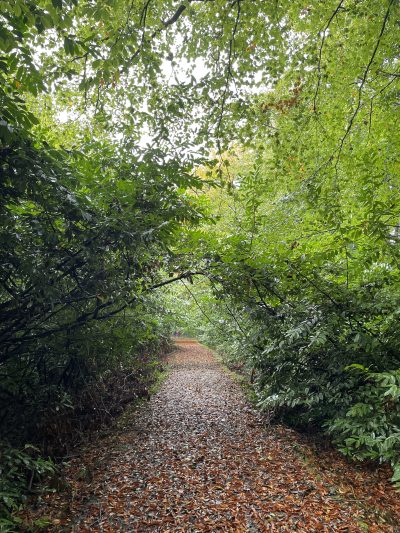
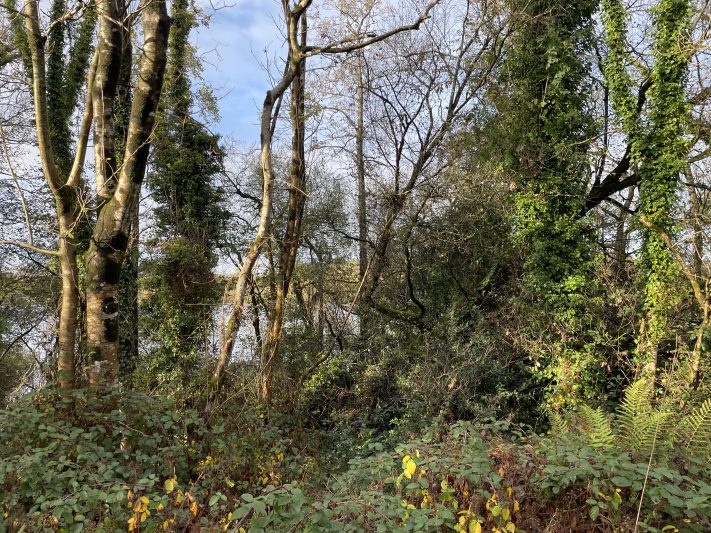
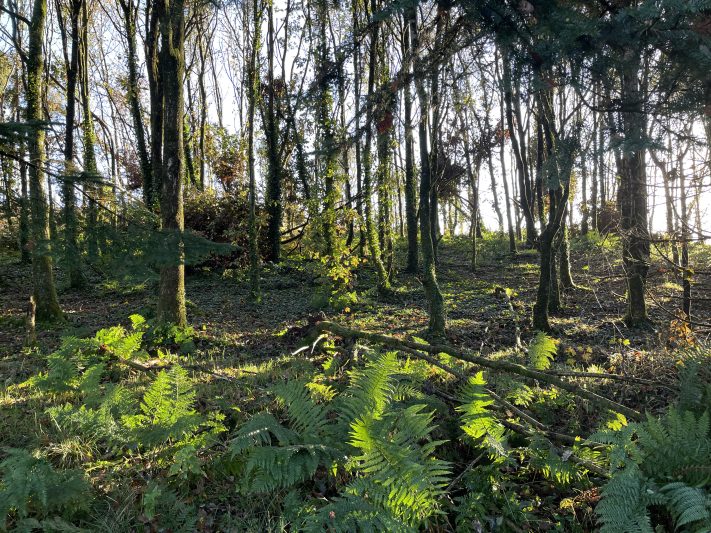
Long out of practice, I began pulling tarot cards in my room to help with my writing. All that leafy green had entered my eyes, giving me a softer view of things. I could allow myself to be a little more spacious in my writing approach than I normally am—following energies rather than adhering to a strict schedule and panicking when I didn’t produce anything. The Wheel of Fortune reminded me that good days lead to bad days lead to good days, and so on. The Hanged Man reminded me that contemplation without activity is an important part of the creative process. The Fool reminded me that writing is a risk, at least a psychological one, and that if you choose to go on, you have to keep taking the risk, even though there are no guaranteed results.
On my second-to-last day at the Centre, I went for a walk through the now-familiar woods and hedge-lined country lanes. It was raining, but I wanted to say goodbye. During the cheerful sit-down dinners that we gathered for each night, we would all tell each other stories about how our days had gone. “Rough, but hoping for better tomorrow.” Or, “Great, but tomorrow it may be hard again.” Some people talked about sensing unknown presences when they walked alone through the leafy avenues along the shores of the lake. At one point, one artist said they’d encountered a dog that kept baring its teeth. Was the dog safe to be around? Another artist put us all at ease: they had met the dog and its owner, and it turned out that the dog, so accustomed to being smiled at by humans, had learned to show its teeth as a friendly greeting. A doggy smile looks unfortunately like a toothy threat. Anyway, after that, I wanted to meet this emotionally sensitive animal. But though I walked for at least an hour or two every day, I never encountered it.
On my last walk, though, I stepped out the door of the manor house and there it was, waiting for me, as if we’d arranged it. When it smiled, I knew not to be afraid. The dog, wagging its tail, accompanied me up and down the wet tree-lined lanes until I got tired and went in for dinner. The fact of our meeting on that last evening helped usher me out of the seclusion of residency life and back into the wider world—where, yes, I now have to face my ongoing fears about writing and publishing.
In the Irish countryside, I was open to signs and signals, things that I’m more likely to scoff at in the city. On that last evening, back in my room after dinner, starting to pack up my things, I noticed that the Fool card, in the Rider Waite Smith tarot deck, shows the Fool blithely stepping off a cliff—accompanied by a small, smiling dog.
Many thanks to Roslyn Margles, and to the Quebec Writers’ Federation, for making my residency at the Tyrone Guthrie Centre possible.