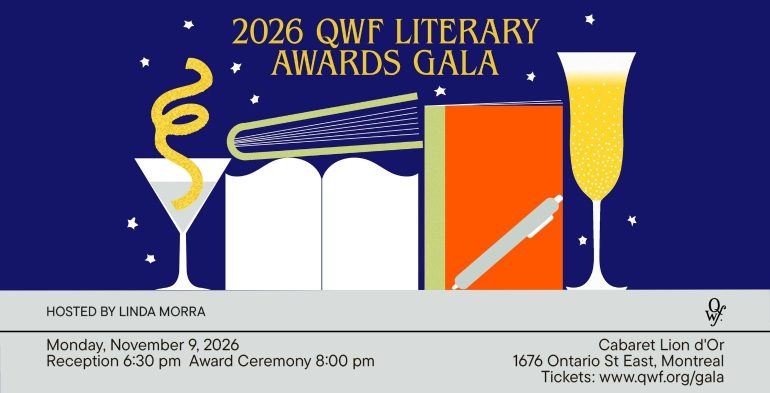
On Monday, November 9, 2026, Quebec’s English-language literary community gathered for the 28th QWF Awards Gala.
Nine winners were revealed across eight categories: first book, spoken word, playwriting, children’s and young adult literature, non-fiction, poetry, translation, and fiction. Each prize included a purse of $3,000, with the purse for the spoken word prize split equally between the winners.
The winners of the QWF College Writers Award and the carte blanche Prize were also revealed, along with the inaugural Lori Schubert Writer in Residence, whose term begins in January 2027. Finally, Rahul Varma was honoured as the recipient of the 2026 Judy Mappin Community Award.
The winners of the 2026 QWF Literary Awards are:
- Paragraphe Hugh MacLennan Prize for Fiction
Zeenat Nagree, My Summer Vacation (Véhicule Press)
- Mavis Gallant Prize for Non-Fiction
Natalie Doonan, Eating the Urban Wild: Food and Foraging in Montreal (McGill–Queen’s University Press)
- A.M. Klein Prize for Poetry
Misha Solomon, My Great-Grandfather Danced Ballet (Brick Books)
- Concordia University First Book Prize
Arizona O’Neill, Opioids and Organs (Drawn & Quarterly)
- Janet Savage Blachford Prize for Children’s and Young Adult Literature
Sandra Dumais, The Mountain That Wouldn’t Move (Owlkids Books)
- QWF Prize for Playwriting:
Rachel McCrum and Amélie Prévost, La Belle-mère / The Stepmother (Les éditions de l’Hexagone)
- Prix de traduction de la Fondation Cole:
Olivia Tapiero, Arabes comme il faut (Groupe Nota bene / Éditions Triptyque), une traduction de The Good Arabs par Eli Tareq El Bechelany-Lynch (Metonymy Press)
- Ian Ferrier Spoken Word Prize:
Silas James, “Space Is a Vacuum” and Deb Vanslet, “Fancy Man”
Read the jurors’ comments about each winner below.
2026 Paragraphe Hugh MacLennan Prize for Fiction
Zeenat Nagree, My Summer Vacation (Véhicule Press)
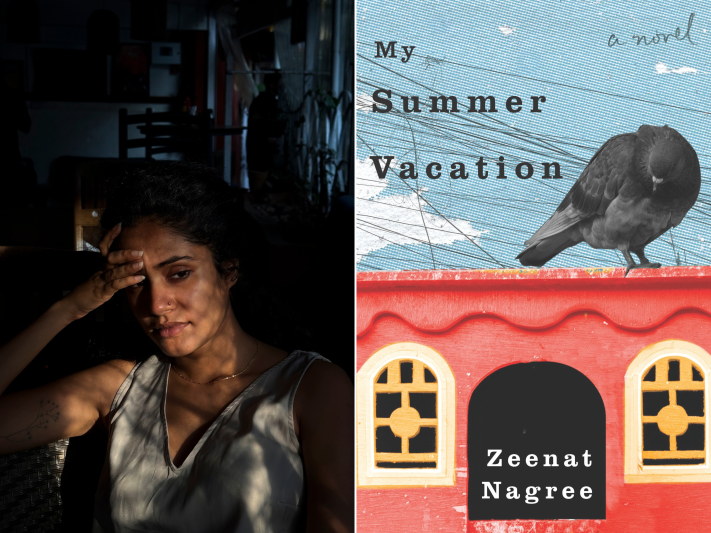
About My Summer Vacation, the jurors said:
“Zeenat is no angel. She lies, cheats, and steals; watches forbidden programming on television after the adults have gone to sleep. A delicate yet honest portrait of a young girl’s summer as she approaches adolescence, My Summer Vacation allows meaning and tension to accumulate beneath the surface of seemingly ordinary days, which is what makes the novel so unique and effective.”
Jurors: Gord Grisenthwaite, Cherie Jones, Jinwoo Park
2026 Mavis Gallant Prize for Non-Fiction
Natalie Doonan, Eating the Urban Wild: Food and Foraging in Montreal (McGill–Queen’s University Press)
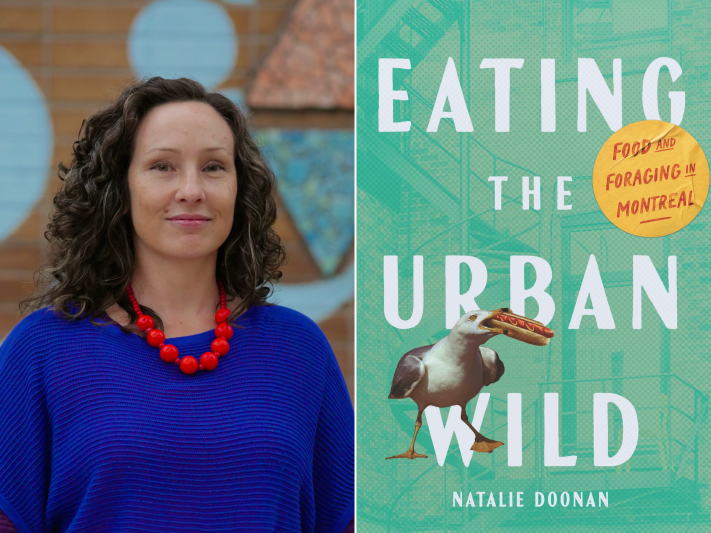
About Eating the Urban Wild: Food and Foraging in Montreal, the jurors said:
My initial response to Natalie Doonan’s Eating the Urban Wild is a plea for more…Doonan writes with delicious originality. Amid ethnographic interviews and embodied research, her prose is lightly salted with personal photographs and even her own, hand-drawn botanical illustrations. Doonan’s prose proves irresistible bait that hooks readers from the beginning. … Eating the Urban Wild is a recipe for how food security currently tastes while ensuring its future shelf-life for urban foragers in Montreal and beyond. It’s not just her book’s focus that’s delectable. Her language craft is mouthwatering.
Jurors: Nancy Forde, Ziya Jones, Suzanne Methot
2026 A.M. Klein Prize for Poetry
Misha Solomon, My Great-Grandfather Danced Ballet (Brick Books)
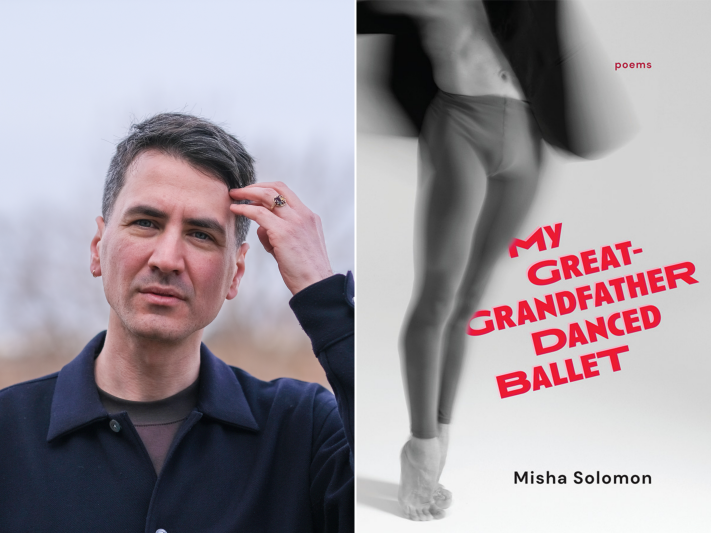
About My Great-Grandfather Danced Ballet, the jurors said:
“My Great-Grandfather Danced Ballet is a touching, playful and clever collection of poems. The extended narrative through-line — to understand and reimagine a relative he never knew — becomes a parallel telling of the speaker’s attempt to understand his story and positionality, in Montreal and the world. The poems call back to each other throughout the collection, creating stories within stories. They hide and reveal, mirroring queer and Jewish immigrant experiences. It is a masterfully crafted dance.
“While never failing to approach the book’s central themes with requisite gravity and substance, I think it is also fair to say that My Great-Grandfather Danced Ballet is also a pleasantly irreverent book, and one which made me laugh out loud to an extent that poetry collections almost never do.”
Jurors: Jessica Bebenek, Nina Jane Drystek, Brandon Wint
2026 Janet Savage Blachford Prize for Children’s & Young Adult Literature
Sandra Dumais, The Mountain That Wouldn’t Move (Owlkids Books)
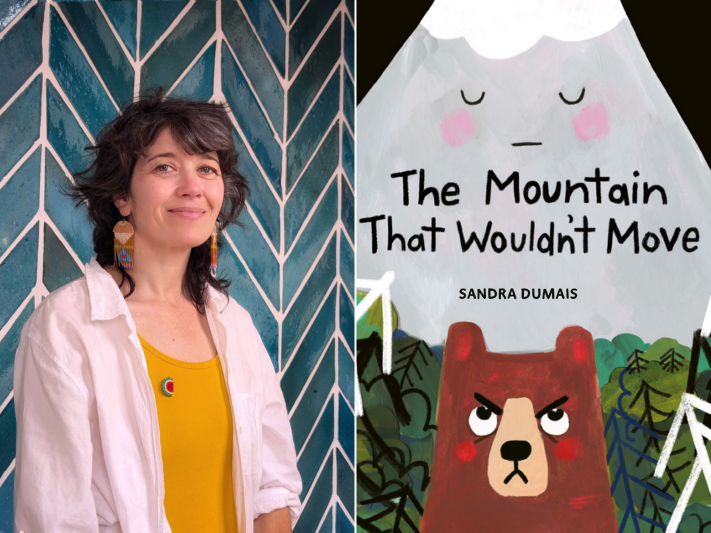
About The Mountain That Wouldn’t Move, the jurors said:
“A gentle picture book that follows a bear determined to move a mountain so that its shadow will no longer block the light, only to become increasingly frustrated and consumed by her inability to change what stands in her way. The language is sparse, evocative and precise, and rhythmically it carries the reader easily along. The book is also full of wonderful humour. The childlike, gentle artwork and cast of animals give the book an inviting warmth. Small in scale yet expansive in meaning, the story offers a moving exploration of frustration, friendship and acceptance.
Jurors: Andrew Katz, Xaiver Michael Campbell, Mahak Jain
2026 Concordia University First Book Prize
Arizona O’Neill, Opioids and Organs (Drawn & Quarterly)

About Opioids and Organs, the jurors said:
“Opioids & Organs by Arizona O’Neill is a perfect first book. It stands out for the way it is daring, formally adventurous, personally introspective, at turns ludic and serious. The subject of the book is serious: the death of the author’s father, the story of his addiction and its impact on the author’s childhood, the author having to assume the necessary role of being the deceased’s next of kin, and therefore her uncertain participation of having her father’s organs being dispatched into the world… [this book ] is adventurous, meaningful, and expertly articulated.
“A candid meditation on the relationship between organ donation, transplantation, and the opioid crisis.”
Jurors: April Ford, Michael Nardone, Michael Redhill
2026 QWF Prize for Playwriting
Rachel McCrum and Amélie Prévost, La Belle-mère / The Stepmother (Les éditions de l’Hexagone)
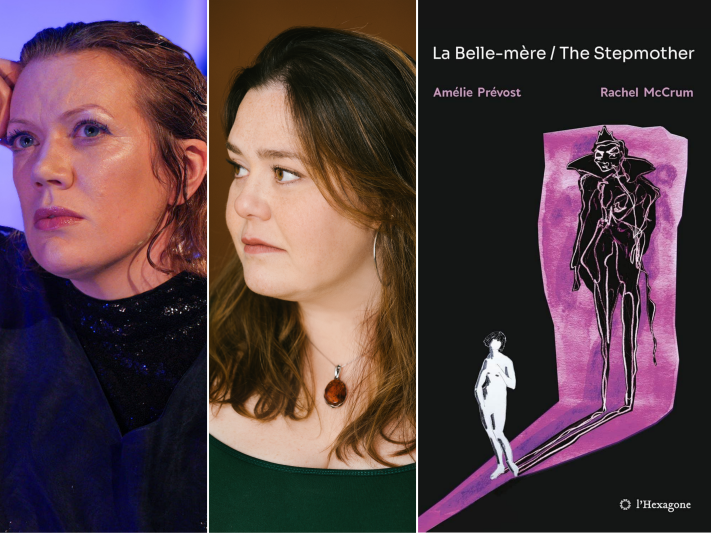
About La Belle-mère / The Stepmother, the jurors said:
“The opening pages of The Stepmother capture the imagination through their balance of openness and specificity, inviting us to ponder who the stepmother might have been before she took on this titular role. This sets the tone for the entire text, which constantly balances a level of simplicity and complexity, specificity and openness, that reminds of real life, real relationships, real experiences of parenting and being parented.
“The stepmother in Rachel McCrum’s and Amélie Prévost’s play cracks her heart open to say “you actually don’t know what it’s like to be in my shoes.” A powerful reinterpretation of an often-villainized character, The Stepmother / La Belle-mère invites us to listen to the perspective of a woman who is expected to think and behave in a way outside of the already questionable norm.
Jurors: Nic Bilon, esi callender, Santiago Guzmán
Prix de traduction de la Fondation Cole 2026
Olivia Tapiero, Arabes comme il faut (Éditions Triptyque)
A translation of The Good Arabs by Eli Tareq El Bechelany-Lynch (Metonymy Press)
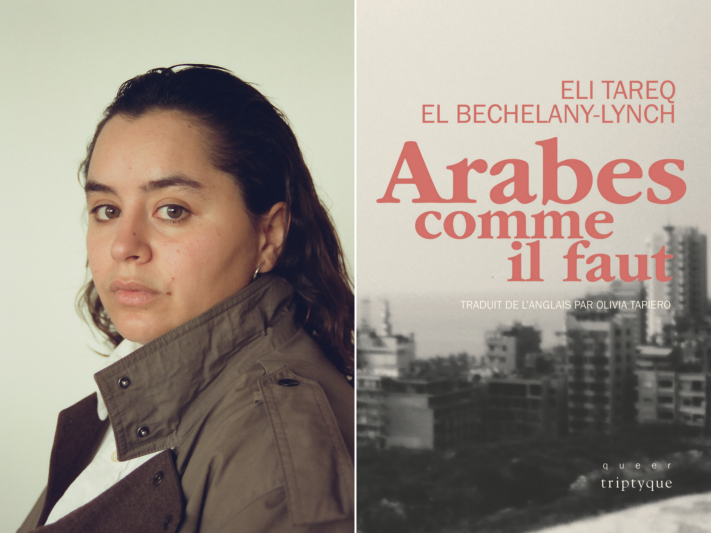
About Arabes comme il faut, the jurors said:
“While reading Eli Tareq El Bechelany-Lynch’s genre-bending poetry collection, we realize the title invokes a character and emphasizes a way to behave and be perceived. The translation, Arabes comme il faut, meaning “Arab as one should be,” is a comment that cuts through any nonsense. Across the pages, the translation flows with the rhythm of the character’s crises, effortlessly neutralizing French’s gendered pitfalls, anti-queer vocabulary, and colonial tones.”
Jurors: Catherine Cormier-Larose, Christelle Saint-Julien, Will Vallières
2026 Ian Ferrier Spoken Word Prize
Silas James, “Space Is a Vacuum”
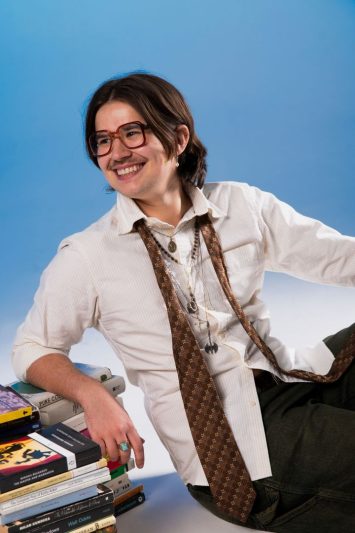
About “Space Is a Vacuum,” the jurors said:
“This piece was beautifully playful, potent, and immersive. The way you carried the audience through both wonder and tragedy was a clear display of bravery and skill. I was sucked into the storytelling, rooting for the pop star at the heart of this story. A piece that deserves attention.”
Deb Vanslet, “Fancy Man”
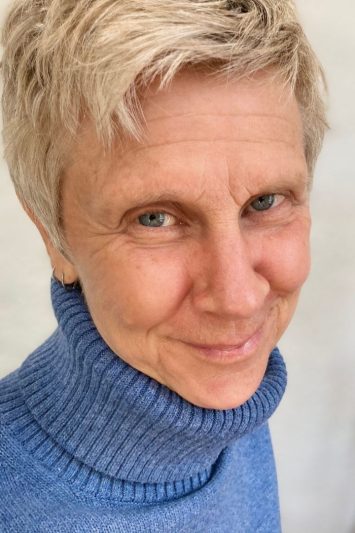
About “Fancy Man,” the jurors said:
“What drew me into ‘Fancy Man’ was how completely I felt immersed in the encounter, following this man around the store and wondering what would happen next. I loved the balance of humour and introspection. The turn toward the storyteller’s own life added moral nuance, inviting us to understand (and even get on board with) choices we might otherwise judge.”
Jurors: Patrick de Belen, Kadi Diop, Miranda Krogstad
Other Prizes Awarded at the 2026 QWF Gala
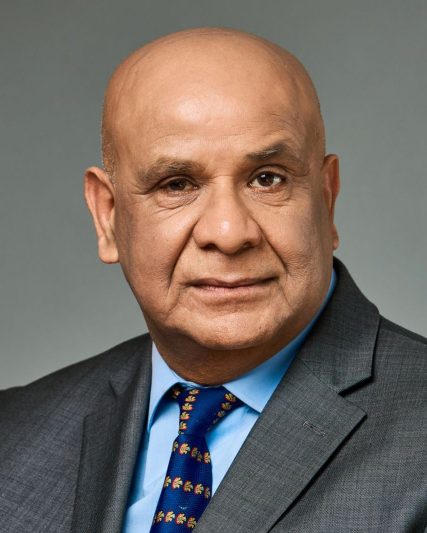
QWF also bestowed the 2026 Judy Mappin Community Award on Rahul Varma, co-founder and Artistic Director of Teesri Duniya Theatre, for his tenacity, vision, and tireless work to diversify and decolonize theatre and create opportunities for marginalized voices in Canadian theatre and society. Since 2025, the award has included a cash prize of $1,000 and a unique trophy—the “Judy”—created by Montreal sculptor Glen LeMesurier.

In addition to the Ian Ferrier Spoken Word Prize, Silas James won first place in the 2026 carte blanche Prize for his short story “raccoon-sized or bigger,” published in Issue 53 of the magazine. The $700 prize is awarded annually in recognition of an outstanding submission by a Quebec writer, artist, or translator to QWF’s online literary journal carte blanche. The $450 second-place prize of $450 went to Katia Grubisic for “Sinking” (Issue 53), a translation of an excerpt from David Clerson’s Mon fils ne revint que sept jours (Héliotrope, 2023). Finally, Emma Moss Brender won the third-place prize, worth $250, for her poem “Black Lines” (Issue 54). The prize’s guest judge this year was Meryem Yildiz.
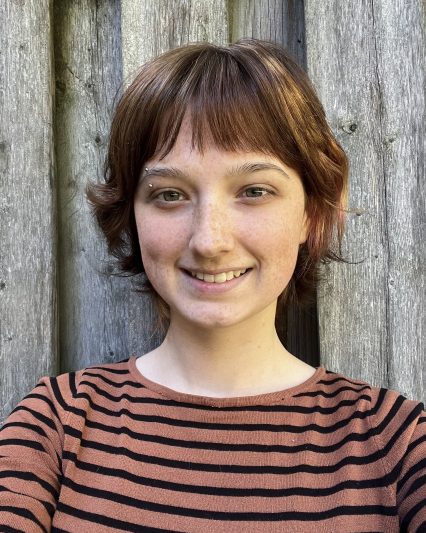
Hailey Racine of Dawson College won the QWF College Writers Award for her short story “Fishhook.” Supported by Champlain, Dawson, Heritage, John Abbott, Marianopolis, and Vanier Colleges, the award recognizes outstanding literary achievement by one student from one of the sponsoring colleges. The winner receives a cash prize of $1,000 and publication in carte blanche.
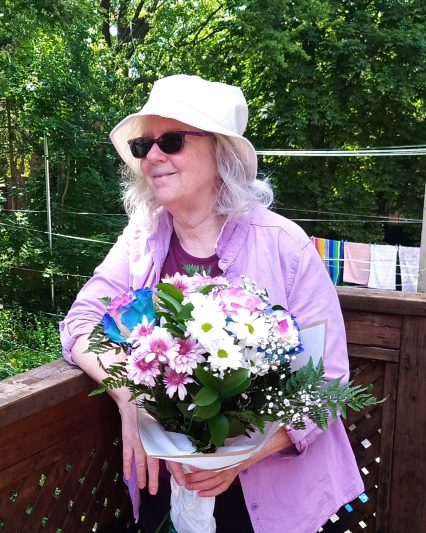
Finally, Edeet Ravel was announced as the inaugural Lori Schubert Writer in Residence, a new annual program for Quebec-based, English-language writers aged 60 and over. The residency includes a stipend of $10,000 and takes place over four months in 2027, January through April, with Edeet dividing her time equally between working on a new project and offering consultations with QWF members.